Genealogy
Lineage
An ancestral estate where everyone is related
A family history
The Lineages of the Sarod
To understand the modern sarod, one must accept that its history is less a gentle river and more an ancestral family estate where everyone is related, nobody quite agrees on the placement of the furniture, and the oldest branches hold the keys to the cellar with uncompromising firmness.
At the head of the table sits the Shahjahanpur Gharana, the undisputed bedrock of the instrument. It branched historically into three distinct streams—all sharing a common pedigree, though each developed its own distinct idea of public decorum.
Interactive chart
The Family Tree
Select any name to read its place in the story. Arrow keys follow the threads from one name to the next; Escape closes the note. Hold Ctrl and scroll, or use the buttons, to zoom; drag to pan once zoomed. The sections below tell the same story in prose.
- Arnab Chakrabarty’s teachers. Trained comprehensively in both the Lucknow and Bengal branches — the only musician to have been so.
- A stream of the Shahjahanpur Gharana
- Confluence · second-cousin marriages
- Transmission, teacher to taught
- Tied by blood: the brothers
- A contributing influence
- Tutelage from outside the family line
Threads trace the passage of the music, not a complete genealogy; intervening generations are elided.
The first stream
The Old Guard: Lucknow
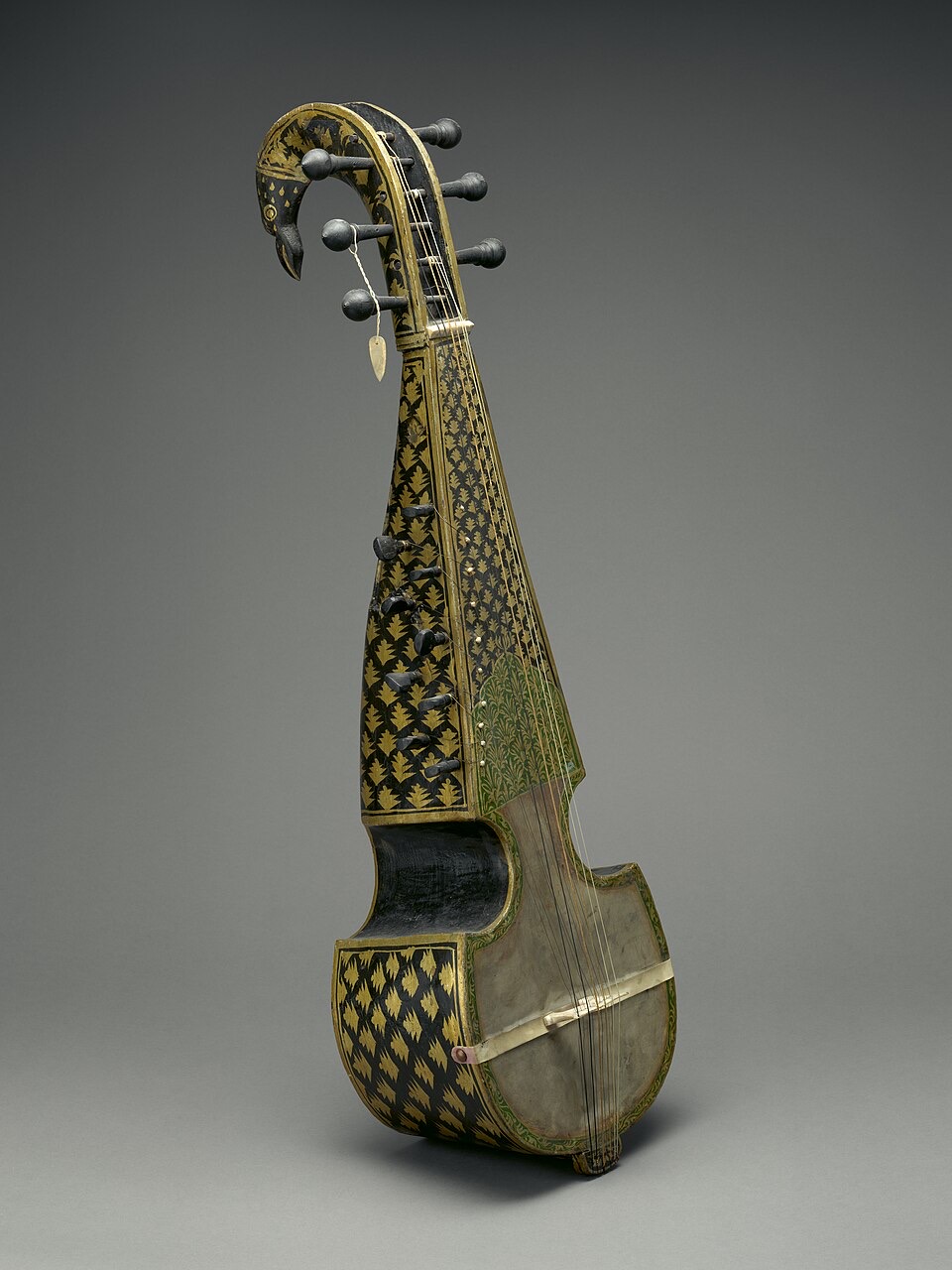
The oldest of the three, Lucknow remains the uncompromising custodian of the pure, traditional instrumental idiom. This branch is actually a merger of the historical Lucknow Gharana (also with roots in Shahjahanpur) and the original Shahjahanpur Gharana, mostly through second-cousin marriages that were common amongst Muslim musicians of the era.
The founding ustads of this gharana were Niamatullah Khan and his sons, Karamatullah and Asadullah “Kaukab” Khan. Through historical Senia ustads like Basat Khan and the brilliant 20th-century patriarch Ustad Sakhawat Hussain Khan, this lineage meticulously preserved the structural integrity of ancient gats and set alap architecture. They maintained a devotion to the instrument’s native voice that treated any attempt to simply imitate vocal music on a plucked string as a mild form of treason.
Ustad Irfan Muhammad Khan (b. 1954) is the definitive artist of this lineage in our times.
The second and third streams
The Linked Lineages: Bengal & Gwalior
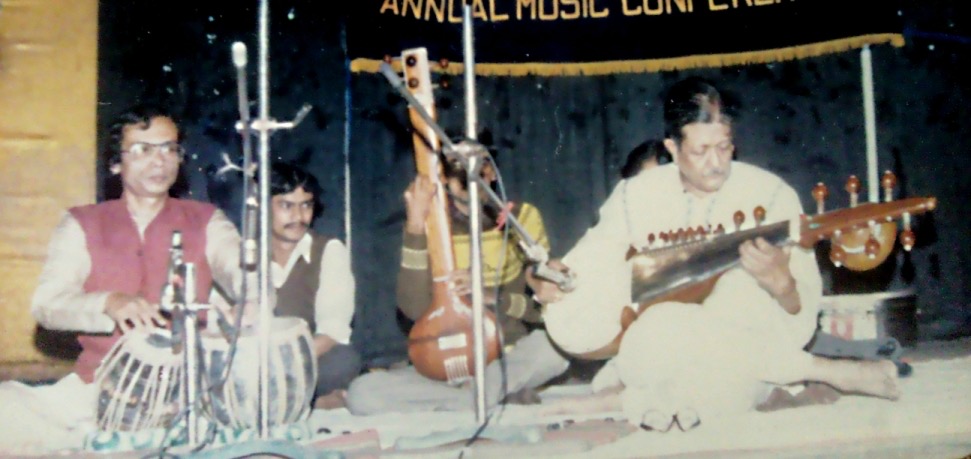
Slightly further down the hall sit the Bengal and Gwalior branches—two streams closely tied by blood, tracing their origins back to the brothers Murad Ali Khan (Bengal) and Nanhe Khan (Gwalior).
- Bengal: Founded by Murad Ali Khan, the Bengal branch retained the parent school’s sharp, intricate pluck-vocabulary. Mastered in the early 20th century by Radhika Mohan Maitra, the style incorporated subtle dhrupad-ang vocalizations to deepen the aesthetic weight of its glides, much like a scholar adding judicious marginalia to an ancient text. Later figures like Buddhadev Dasgupta and Kalyan Mukherjea drew heavily from khayal vocals, introducing rapid, alternate-picked 16th notes (ekhara taan) across complex string shifts—all while maintaining absolute mastery over their inherited composition bank.
- Gwalior: Established by Nanhe Khan—whose branch arose after a rather spirited family disagreement over his domestic arrangements—Gwalior chose to translate vocal ornamentation directly onto the fingerboard. The lineage was carried forward by his son Ustad Hafiz Ali Khan and grandson Ustad Amjad Ali Khan, balancing expressive phrasing with courtly restraint.
(Along the way, the branch managed to inspire a curious piece of British journalism that famously grouped the sarod alongside chicken tikka masala as twin pinnacles of Mughal elegance—an assessment as flawed in its organology as it was in its culinary history. Among these romantic embellishments was the novel assertion that string-stopping with the fingernails was a mid-20th-century invention, rather quietly overlooking the preceding two centuries of sarod players who had been employing precisely that technique since the instrument was first adapted from the Afghan rabab.)

A later branching
The Relative Newcomer: Maihar
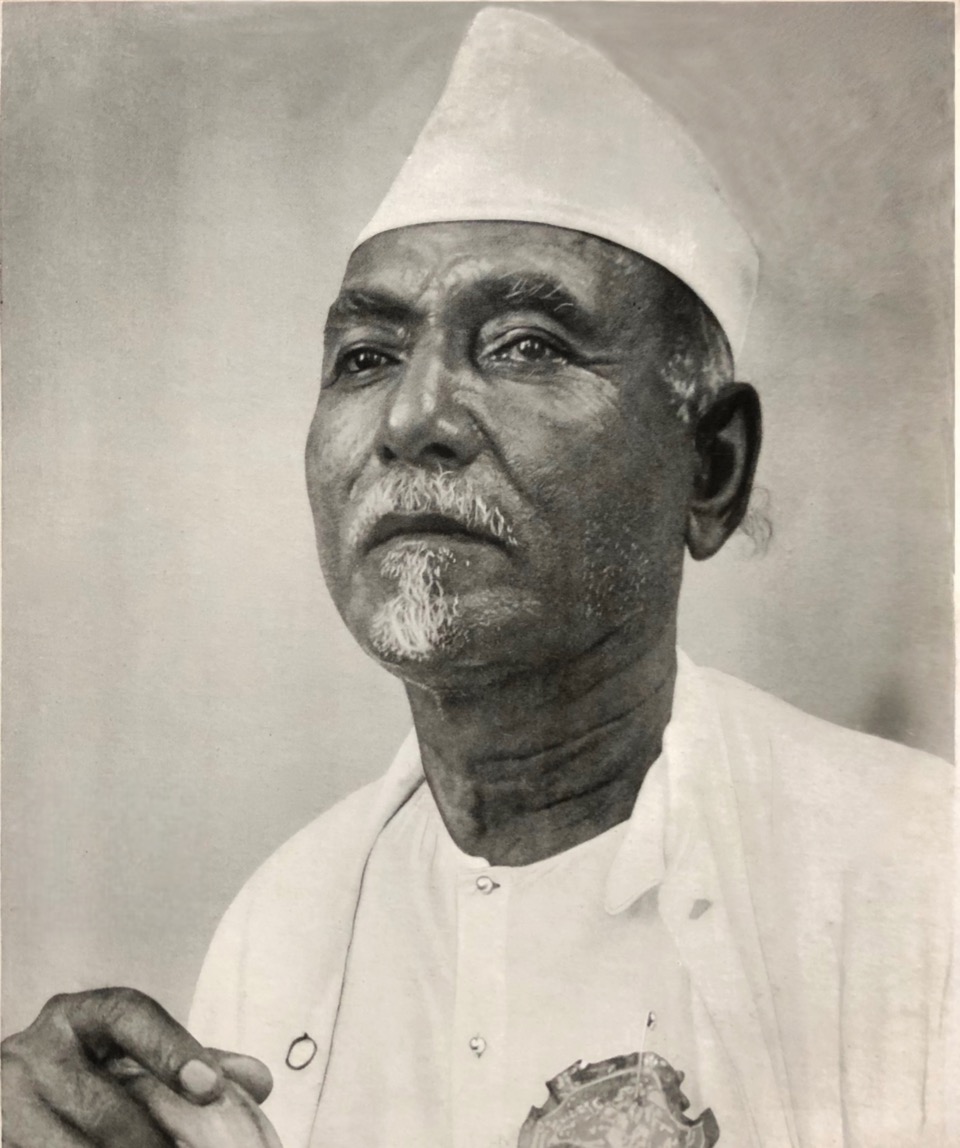
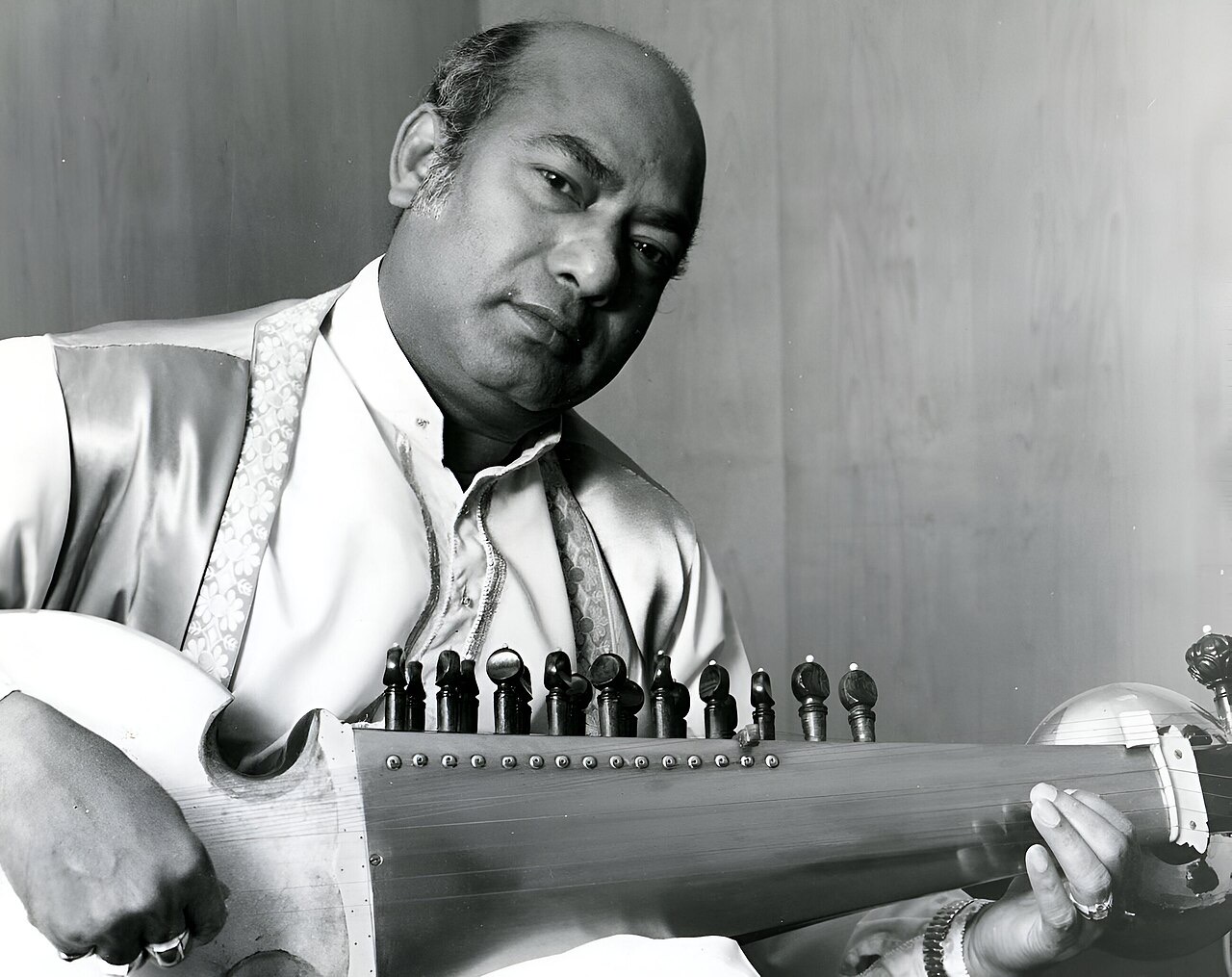
The Maihar Gharana represents the youngest major sarod lineage, brought into existence through the extraordinary intellect, pedagogical genius, and retentive memory of Ustad Alauddin Khan. Having immersed himself in Rampur under the tutelage of early Shahjahanpur masters like Ahmed Ali Khan and absorbing the vast repertoire of figures like Fida Hussain Khan, Baba Alauddin synthesized an unprecedented body of traditional knowledge—largely by possessing a memory so alarmingly retentive that he could absorb an ustad’s lifework simply by being in the same house.
He later underwent an extended discipleship under the Senia ustad Wazir Khan, a master of the sursringar and been. Upon settling in Maihar under the patronage of Raja Baijnath Singh, he established a new school that flowered through the exceptional artistry of his disciples—including Ustad Ali Akbar Khan, Pandit Ravi Shankar, Annapurna Devi, Nikhil Banerjee, and Pannalal Ghosh—forever altering the landscape of Indian classical music.
Where the threads meet
The Convergence
As a true modernist, Arnab Chakrabarty approaches this landscape without local tribalism. He combines what he considers the distinct virtues of all these traditions and their respective masters, while remaining firmly rooted in the Shahjahanpur Gharana—having absorbed nearly the entire compositional and stylistic repertoire of its two main branches.